
Buzzing Around: All About House Flies!
What are house flies?
House flies, also known by their scientific name Musca domestica, are one of the most common types of flies found around homes and other buildings. These pesky insects are attracted to decaying organic matter, making them a frequent visitor in places where food is left out or garbage accumulates. Adult house flies are about 1/4 inch long, gray in color, and have four black stripes on their back. They can be a real nuisance, especially when they show up in large numbers.
Why are they interesting?
Despite being a common pest, house flies have some fascinating features. For instance, their life cycle is incredibly rapid. Flies lay their eggs in batches of about 100 in decaying organic matter, and these eggs hatch into larvae, also known as maggots, within a day. The maggots then turn into pupae before becoming adult flies. This entire process can happen in just a few weeks, allowing house fly populations to grow quickly if not controlled. Plus, house flies feed on a wide variety of food sources, using their unique ability to regurgitate digestive fluids to dissolve their meals before sucking them up.
Fun Fact
House flies are amazing flyers—they can beat their wings 200 times per second! This makes them incredibly agile and hard to catch with a fly swatter.
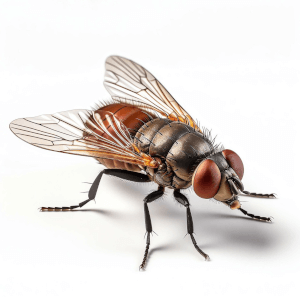
Physical Characteristics
House flies, also known as Musca domestica, are a type of fly commonly found around homes and other buildings. They are typically about 1/4 inch long and have a grayish color with four distinct black stripes on their thorax. Their bodies are covered in tiny hairs, which help them sense their environment. Unlike fruit flies, which are smaller and have a tan or brownish color, house flies have large, red compound eyes that give them excellent vision. They also have two translucent wings, which they use to fly with incredible agility.
Quick ID Tips
Recognizing a house fly quickly can help you take steps to control their population and prevent an infestation. Here are some easy tips:
Size and Color: House flies are about 1/4 inch long and have a gray body with four black stripes on their thorax. They are larger than fruit flies and cluster flies, which are often mistaken for them.
Eyes: Look for their large, red eyes. This is a distinctive feature of house flies.
Wings: House flies have clear, slightly iridescent wings that they beat very quickly. This rapid wing movement allows them to be agile flyers.
Behavior: House flies are often seen buzzing around food sources, garbage, and other decaying organic matter. They are attracted to these areas as breeding sites.
Life Cycle: If you find small, white larvae (maggots) or pupae in your home, this is a sign of house fly breeding. House flies lay their eggs in decaying organic matter, and these eggs hatch into larvae within a day.
Feeding Habits: House flies feed on a wide variety of substances, including food scraps and other decaying material. They regurgitate digestive fluids to dissolve their food before consuming it.
By using these identification tips, you can differentiate house flies from other fly species like stable flies, blow flies, flesh flies, and phorid flies. Understanding these characteristics can also help in controlling house flies and preventing a house fly infestation. If you notice a large number of flies inside your home, it might be time to set up a fly trap or sticky fly paper. For more severe fly problems, consider contacting a licensed pest control professional who can implement an integrated fly management program.
House flies are often attracted to decaying organic matter, where they lay their eggs. These eggs hatch into larvae, commonly known as maggots, and then develop into pupae before emerging as adult flies. Keeping your home clean and removing potential breeding sites can help exclude flies and reduce their population. In some cases, augmentative biological control methods, such as using natural predators, can also be effective in managing house fly populations.
Remember, house flies are not just a nuisance; they can also pose health risks by spreading food poisoning and other diseases. Regularly cleaning up food sources and using fly control measures can help prevent a house fly infestation and ensure a healthier home environment.
Keeping Flies Away
Preventing house flies from entering your home is key to avoiding an infestation. House flies, or Musca domestica, are attracted to decaying organic matter and food sources. Here are some tips to keep these pests away:
Seal Entry Points: Ensure that windows, doors, and vents are properly sealed. Use screens to cover any openings that flies might use to enter your home.
Proper Waste Management: Dispose of garbage regularly and keep trash bins tightly sealed. Flies are attracted to garbage as a breeding site and food source.
Fly Traps and Fly Paper: Set up fly traps or sticky fly paper around your home. These traps may catch many flies before they can become a problem.
Food Storage: Keep food covered and store it in airtight containers. Flies feed on a wide variety of foods and are often drawn to exposed food items.
Clean Up Spills Immediately: Flies can breed in tiny bits of food residue. Clean up any spills, especially those involving sugary substances, to prevent attracting flies.
Clean Habits
Maintaining cleanliness is crucial in preventing house fly infestations. House flies lay their eggs in decaying organic matter, and the larvae (maggots) hatch from these eggs within a day. Here’s why cleanliness is important and how you can practice it:
Regular Cleaning: Sweep and mop floors regularly, especially in the kitchen and dining areas. Clean countertops and other surfaces where food is prepared or consumed.
Pet Waste Management: Clean up after pets promptly. Pet waste can be a breeding site for flies, especially if left unattended for long periods.
Yard Maintenance: Remove decaying plant material and compost properly. Flies often lay their eggs in these areas, so keeping your yard tidy can help reduce fly populations.
Drain Maintenance: Clean and maintain drains to prevent the buildup of organic matter that can attract flies. Use a drain cleaner regularly to keep them free of debris.
Proper Storage of Organic Waste: If you compost, make sure to cover your compost bin and keep it away from the house. Flies are often attracted to compost piles, which can become breeding grounds.
By following these tips and maintaining clean habits, you can significantly reduce the likelihood of a house fly infestation. In cases where you have a large number of flies inside, it might be necessary to call a licensed pest control professional. They can implement integrated fly control measures, including the use of fly bait, sprays, and augmentative biological control to manage fly populations effectively.
House flies are not just a nuisance but can also be a health risk by spreading food poisoning and other diseases. Flies regurgitate digestive fluids to dissolve their food, which can contaminate surfaces and food items. Implementing effective fly control and maintaining a clean environment can help prevent these issues and keep your home fly-free.
Life Cycle
House flies, or Musca domestica, have a fascinating life cycle. Here’s how they develop from egg to adult:
Eggs: Female house flies lay their eggs in decaying organic matter, such as garbage or animal waste. They can lay up to 500 eggs in their lifetime, usually in batches of about 100 eggs.
Larva (Maggot): The eggs hatch into larvae, commonly known as maggots, within 24 hours. These maggots feed on the decaying material where they were laid, growing rapidly.
Pupa: After about a week, the maggots move to a drier area to pupate. During the pupal stage, they transform into adult flies. The pupal case hardens and darkens as the fly develops inside.
Adult House Fly: Once fully developed, the adult house fly emerges from the pupal case. Adult flies are typically ready to reproduce just a few days after emerging, starting the life cycle anew.
Fun Fact: A house fly can lay up to 500 eggs in its lifetime!
Diet and Behavior
House flies have diverse eating habits and unique behaviors:
Diet: House flies feed on a wide variety of substances, including food scraps, animal waste, and other decaying organic matter. They use their specialized mouthparts to sponge up liquids. Flies regurgitate digestive fluids onto solid food to dissolve it, making it easier to consume.
Behavior: House flies are attracted to places where they can find food and breeding sites. This often includes garbage, compost piles, and pet waste. They are highly active during the day and rest at night.
Fun Fact: Flies taste with their feet! When a house fly lands on something tasty, it uses sensors on its feet to determine if it’s good to eat.
Importance of Flies
House flies play several important roles in nature and the ecosystem:
Decomposition: House flies help break down and recycle decaying organic matter. By doing so, they contribute to the decomposition process, which is essential for nutrient cycling in ecosystems.
Food Source: House flies serve as a food source for many animals, including birds, spiders, and other insects. They are an integral part of the food web.
Pollination: Although less effective than bees, house flies can also assist in pollination by transferring pollen as they move from flower to flower.
However, house flies can also pose health risks by spreading diseases and causing food poisoning. Effective fly control measures are essential to prevent these issues.
Let’s see how much you know about house flies! Here are some fun questions to test your knowledge:
Question: How many eggs can a house fly lay in its lifetime?
Answer: Up to 500 eggs!
Question: What do house flies taste with?
Answer: Their feet!
Question: Where do house flies usually lay their eggs?
Answer: In decaying organic matter like garbage or animal waste.
Question: How long does it take for house fly eggs to hatch into larvae?
Answer: About 24 hours.
Question: What is another name for the larvae of house flies?
Answer: Maggots.
By learning more about house flies and their life cycle, diet, and role in nature, we can better appreciate their importance and the need for effective pest control. Whether you’re using fly traps, sticky fly paper, or integrated fly management programs, understanding house fly behavior is key to keeping your home free from these common pests.