
EXPLORING THE WORLD OF CARPENTER ANTS
Why Prevention Matters
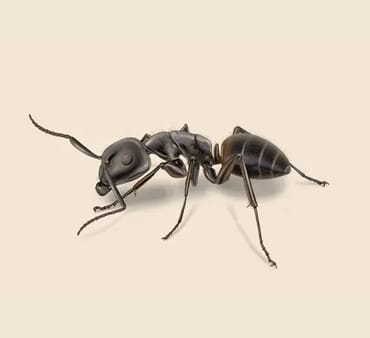
Preventing carpenter ant damage to our homes is crucial because, unlike termites, carpenter ants don’t eat wood but still cause significant structural damage by excavating wood to create their nests. This can weaken the wooden elements of our homes, leading to costly repairs. Carpenter ant colonies, especially those of the black carpenter ant, can grow large, and their preference for moist wood means that an infestation can also indicate other moisture-related issues in a home, such as leaks that could cause further damage.
Simple Steps for Prevention
1. Keep Wood Dry: Carpenter ants prefer moist wood, so ensuring that all wood around your home is dry and well-maintained is essential. Repair leaks promptly, and make sure downspouts and gutters are directing water away from your house to prevent wood from becoming damp.
2. Seal Cracks and Openings: To prevent carpenter ants from entering your home, seal cracks and openings around doors, windows, and other entry points. This includes gaps where utility pipes and wires enter the house. By doing so, you reduce the chances of a carpenter ant infestation.
3. Store Firewood Away from the House: Firewood can be an inviting nest location for carpenter ants. Store it well away from your home’s perimeter to discourage ants from moving closer to your home.
4. Trim Tree Branches: Tree branches touching your home can provide a direct path for carpenter ants to enter. Trimming branches away from the house can help prevent ants from getting inside.
5. Use Ant Bait Strategically: If you notice carpenter ants around your home, using ant bait can help control the population. Place bait near suspected entry points to lure ants before they enter your home.
Coexisting with Carpenter Ants
Understanding the ecological role of carpenter ants helps us appreciate why completely eliminating them isn’t always the best option. These ants are important decomposers in natural environments, breaking down dead wood and helping control other pest populations. However, it’s crucial to manage their presence in our homes to prevent damage. Regular inspections can help identify potential nest locations or moisture issues early on, allowing for proactive pest control measures without resorting to widespread pesticide use. When an infestation occurs, contacting a pest control professional can ensure that the problem is handled effectively and safely, minimizing harm to the ants and the environment.
In managing carpenter ants, balance is key. While it’s important to prevent them from damaging our homes, we must also respect their role in nature. By taking preventive measures and acting responsibly when control is necessary, we can coexist with carpenter ants and maintain both our homes and the natural balance.
Fascinating Facts:
Carpenter ants are incredible creatures with a complex social structure. Did you know that within a single carpenter ant colony, there’s a clear division of labor? Worker ants are responsible for foraging, caring for the queen’s young, and expanding the nest, while the queen focuses on laying eggs. These ants communicate through chemicals called pheromones, which help them alert the colony to danger or lead them to food sources. Unlike termites, carpenter ants do not eat wood; they remove it to make room for their growing colonies, creating intricate galleries within wooden structures. This behavior, while potentially damaging to our homes, plays a vital role in the ecosystem, helping to break down decaying wood in natural settings.
Conservation Efforts:
Carpenter ants contribute significantly to biodiversity. By breaking down dead wood, they recycle nutrients back into the soil, supporting forest health. Protecting their habitat is crucial for maintaining ecological balance. This includes conserving forests and natural wooded areas and using pest control methods that do not harm the environment. Encouraging the growth of native plants around your home can also support carpenter ants and other wildlife, promoting a diverse ecosystem.
Scientific Studies:
Scientists study carpenter ants to understand their behavior, social structure, and impact on the environment. Simple experiments, like observing how these ants choose their food or follow trails, provide insights into their complex decision-making processes. Research has shown that carpenter ants can adapt to changing environments, which helps scientists predict how other species might respond to climate change and habitat loss.
Getting Involved:
Young readers can become citizen scientists by observing carpenter ants in their natural habitat. Start by watching where ants go when they leave your picnic or set up a small bait station with sugar water and see how many ants it attracts. Documenting your findings with photos or notes can contribute valuable data to local environmental studies. Participating in local cleanup efforts or habitat restoration projects can also help protect the carpenter ant’s environment and ensure they have a place in our ecosystem.
Takeaway Message:
Every creature, no matter how small, plays an essential role in our planet’s health. Understanding and respecting carpenter ants, with their fascinating social structures and ecological importance, remind us of the interconnectedness of all life. By learning about these creatures and taking steps to coexist with them, we contribute to a healthier, more balanced planet. Remember, it’s not about getting rid of ants or other insects; it’s about finding ways to live in harmony with them, appreciating the incredible diversity of life around us, and protecting our shared home.